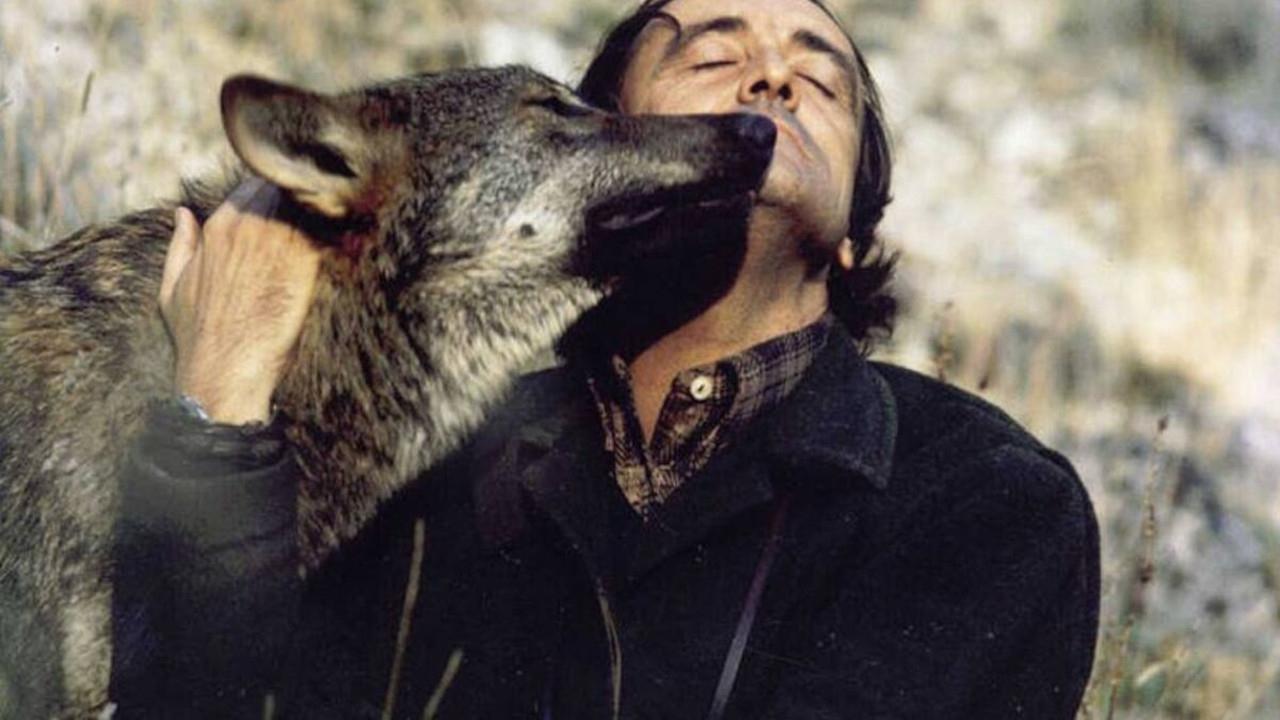

Seasons & Episodes
Presentation (Venezuelan Series)
During the spring of 1973, a TVE crew, in close collaboration with several Venezuelan government agencies, produced a se
The Scourge of the Sun
The show's crew undertakes a rescue operation for the animals most affected by the heat and drought.
Operation Anaconda
During a rescue operation, the crew captures gigantic anacondas, caimans, and tortoises to prevent them from dying of de
The Capybara Roundup
The animals most affected by the tremendous drought plaguing the plains of Venezuela are the chigüires, or capybaras, r
The Venezuelan Virgin Jungle
The largest forest mass on our planet spans the immense Orinoco–Amazon basin. Under a perpetually humid climate, the g
The Yanomami, a People of the Jungle
In the deciduous jungles lining the banks of the Upper Orinoco and its tributaries lives a Paleo-Indian tribe that has o
In Search of the Indians of the Upper Orinoco
Félix Rodríguez de la Fuente and his crew navigate the Orinoco, where they encounter the Yanomami. A people of the Ven
The World of the Jaguar
The largest and most powerful of South American carnivores is the jaguar. Once abundant, the Man and the Earth crew had
The Fierce People
One of the most distinctive traits of the Yanomami is their warlike behavior.
A Camp in the Virgin Jungle
After spending a season with the Yanomami, the Man and the Earth crew is guided by some of these indigenous people deepe
The Giant Otter
The giant otter, or water dog as it is known in South America, is one of the most beautiful, fascinating, and little-kno
The Sacred Mountain
South of Puerto Ayacucho, the vertical and inviolate mass of Cerro Autana rises, the sacred mountain of the Piaroa peopl
The Plains of Venezuela
The Man and the Earth crew shows us the Llanos of Venezuela, one of the largest and least known regions on the planet.
The Paradise of the Birds
South America is a paradise for birds, known by scientists as the "continent of birds." The Republic of Venezuela alone
The World of Coral
The Man and the Earth crew, joined on this occasion by underwater and surface filmmakers, captures on camera an entire w
The Island of the Gannets
On a flat islet covered with glasswort, in the middle of the Venezuelan Coral Sea, brown boobies nest. The reproductive
My Friend the Otter
At the small river port of La Esmeralda, the Man and the Earth crew finds a six-month-old giant otter that had been lite
The Lost Eden
Dr. Rodríguez de la Fuente concludes the expedition across Venezuela and returns to Spain with the giant otter rescued
The Lords of the Forest I
The life of the red deer, from birth to maturity.
The Lords of the Forest II
In the forests and thickets of central, southern, and western Spain, in the ecosystem known as the Mediterranean forest,
The Little Killers I
In the animal community of the Mediterranean forest, small herbivores, plant-eating animals such as mice, garden dormice
The Little Killers II
In the Mediterranean forest, small herbivores such as mice, garden dormice, rats, squirrels, and rabbits are abundant. T
The Black Vulture I
The great winged scavenger of the Mediterranean forest is the black vulture. In prehistoric times, black vultures must h
The Black Vulture II
The great winged scavenger of the Mediterranean forest is the black vulture. In prehistoric times, black vultures must h
The Storks I
Families of white storks arrived on the Iberian Peninsula in the middle of winter. They return to their old nests and ca
The Storks II
Storks have a wide and highly varied dietary range; they eat anything that is not plant matter. Their favorite prey incl
Bonelli's Eagle I
The fastest and most acrobatic of European eagles, known to Anglo-Saxon naturalists as the hawk-eagle, nests on the clif
Bonelli's Eagle II
The fastest and most acrobatic of European eagles, known to Anglo-Saxon naturalists as the hawk-eagle, nests on the clif
The Iberian Wild Goat I
Defeated, before dying, the old wild goat remembers his life: the golden eagle attack in his youth, the harsh winters, t
The Iberian Wild Goat II
Defeated, before dying, the old wild goat remembers his life: the golden eagle attack in his youth, the harsh winters, t
The Pirate of the Thicket
The most representative bird of prey of European forests is the goshawk. With swift and acrobatic flight, armed with pow
Las Tablas de Daimiel I
Shallow, vast steppe lagoons are of extraordinary importance for migratory waterfowl in Mediterranean countries. Drainag
Las Tablas de Daimiel II
Shallow, vast steppe lagoons are of extraordinary importance for migratory waterfowl in Mediterranean countries. Drainag
The Living Projectile
The fastest of all living animals is the peregrine falcon. In vertical or diagonal dives, it reaches speeds of over 350
The Valley of the Eagles
Four species of eagles live in Spain: the golden eagle, the imperial eagle, Bonelli's eagle, and the booted eagle. The i
Taiga, the Goshawk
Through the medieval rules of falconry, the bird is tamed and trained until its will is won over.
The Fawn I
Starting from a close-up of the magnificent trophy, the life of the deer is reconstructed.
The Fawn II
The life of the magnificent deer is like a river: from when he was nothing more than a cub chased by a lynx, protected b
El Hosquillo, Bears
Deep in the Cuenca mountain range, occupying a great tectonic trench of pine forests crossed by a crystalline river, lie
Falconry I
Peregrine falcons and other raptors have been domesticated by humans since ancient times to hunt various species of bird
Falconry II
In the Middle Ages, the taming and use of high-flying falcons was known as "altanería."
The Shrike
One of the most fearsome pirates of the Mediterranean forest is a small bird barely larger than a sparrow. Capable of ca
The Last Vultures of Europe
In this episode, besides vultures, different species appear, among which the eagle (imperial and short-toed), storks, wo
The Golden Eagle I
An in-depth look at the Spanish golden eagle, from the courtship display to the moment the eaglets leave the nest.
The Golden Eagle II
An in-depth look at the Spanish golden eagle, from the courtship display to the moment the eaglets leave the nest.
The Garden Dormouse I
In this first part, all the processes of reproductive biology and rearing of the young of the species also known as the
The Garden Dormouse II
Second part on the life of the garden dormouse, or hill rat. The garden dormouse is one of the most beautiful rodents in
The Griffon Vulture I
A carrion bird of steppe and mountain, the griffon vulture saw its ecological opportunities increase on the Iberian Peni
The Griffon Vulture II
Second part on the existence of the griffon vulture as a carrion bird.
The Bee-eater I
Birds of African origin, bee-eaters spend part of the spring and summer in Spain. Sporting a beautiful multicolored plum
The Bee-eater II
The secrets of the bee-eater's life, from the courtship display to the ritualized fights the chicks engage in to maintai
The Wolf
An episode explaining the wolf's relationship with humans from its origins.
Zoological Olympics I
Iberian wildlife boasts several champions in different sporting disciplines; in this episode, Félix Rodríguez de la Fu
Zoological Olympics II
Nature has its own ranking of athletes, and in this episode Félix Rodríguez de la Fuente studies the abilities of each
Migratory Birds
Spain is a stopover and nesting site for several migratory species. In autumn, shortly after the storks and herons leave
The Woodpeckers I
These birds, belonging to the order Piciformes, build their nests by drilling into wood. Among woodpeckers, some are pra
The Woodpeckers II
In this episode, we observe that woodpecker chicks develop quickly.
The Woodpeckers III
Woodpeckers are insectivores and contribute to the health of the forests where they nest.
The Wild Boar I
Among the large mammals of our wildlife, wild boars are without a doubt the most abundant and thriving. The high number
The Wild Boar II
The natural predators of wild boars are lynxes, eagles, and wolves, although a large number of animals are also killed d
The Wise Vulture
In this episode, we will learn firsthand how the Egyptian vulture is capable of using tools to perform tasks essential t
The Beautiful Killer
The genet is a predatory mammal of nocturnal habits that lives throughout Africa, the Iberian Peninsula, and southwester
The Hunting Game I
Among the most aggressive carnivores are undoubtedly the mustelids. In a small burrow, a polecat fights to the death wit
The Hunting Game II
As soon as the young polecats finish nursing, their parents carry the animals they capture into the burrow to feed their
The Family Clan
Today's episode shows us how a wolf pack lives from the birth of the pups until they leave the den. The wolf cubs grow r
Innocent Killers
In this episode we can see that the Mediterranean forest is home to abundant small herbivores, such as mice, garden dorm
The Cormorant
While the crew sails through the waters of the Cabrera sub-archipelago, they discover a small cormorant chick that has f
Nocturnal Raptors I
In this episode we can see Félix and his crew, including biologist Carlos Sanz, capturing different owls and nocturnal
Nocturnal Raptors II
In this episode we can see Félix and his crew, including biologist Carlos Sanz, capturing different owls and nocturnal
The Corvids I
Corvids, like all omnivores, are extraordinarily intelligent. Their courtship behavior, nest building, social conduct, a
The Corvids II
Corvids, like all omnivores, are extraordinarily intelligent. Their courtship behavior, nest building, social conduct, a
Operation Fox I
Another animal in danger of extinction, the Iberian fox. In this episode we can observe its life and habits.
Operation Fox II
The foxes captured unharmed by eagles are released equipped with electronic transmitters that allow their movements to b
Cabrera, Island Paradise I
The Cabrera sub-archipelago, located in the Balearic archipelago, is made up of a group of islands and islets that are h
Cabrera, Island Paradise II
The Cabrera sub-archipelago, in the Balearic Islands, is made up of a group of islands and islets that are home to a mul
The Imperial Eagle I
Courtship displays, nest building, incubation; the early life of the eaglets and departure from the nest in the three mo
The Imperial Eagle II
One of the most beautiful and scarce raptors in the world is the imperial eagle, which has its last refuge on the Iberia
The Social Hunter
The wolf is a predator that lives and operates within perfectly hierarchical groups. Four years of studying and filming
The Conquest of Water I
In mountain rivers, crystal-clear and pure rapids, larvae of certain insects such as dragonflies, caddisflies, diving be
The Conquest of Water II
The white-throated dipper is capable of diving in churning, fast-flowing waters to capture the larvae and adult insects
Doñana National Park I
After the dry season, the Guadalquivir marshland restarts its biological cycle with the first autumn rains. Two natural
Doñana National Park II
We can see how the Guadalquivir marshlands begin their biological cycle with the first autumn rains. Throughout the year
Doñana National Park III
The Guadalquivir marshland, like all estuaries and wetlands in warm climates, reaches very high levels of nutrient produ
Doñana National Park IV
During the second half of July, the dried-out beds of the marshland begin to crack. The most striking event in the Doña
The Little Winged Hunters I (The Hobby)
The hobby is a small migratory falcon that nests in Europe and winters in Africa and Madagascar. It is so fast and resil
The Little Winged Hunters II (The Kestrel)
A study of the kestrel's behavior, its nesting process, rearing and emancipation of the chicks, and its prodigious hunti
The Little Winged Hunters III (The Sparrowhawk)
The sparrowhawk is one of the most common little winged hunters in forested areas: its nesting process, rearing of the c
The Steppe Birds I
The Castilian steppe was created by man, just like the vast bare plains of Extremadura, Aragon, and lower Andalusia. Ori
The Steppe Birds II
In April, the mating display of the great bustards takes place. The bearded old males, weighing up to 17 kilograms, acqu
The Steppe Birds III
The rearing of great bustard chicks from hatching to emancipation had never been filmed in the wild. These enormous bird
The Last Lynx
A huge, old lynx roams a Spanish mountain range, trying to capture some prey, but his attacks on rabbits, partridges, an
The Rodents I
The most adaptable of mammals, after man, are the rodents: rats, mice, voles, dormice... they proliferate in fields and
Rescued from Extermination
According to data provided by paleontologists, the fallow deer and the mouflon disappeared from the European continent w
The Rodents II
For the study of rodents, they have been divided into two parts: common or urban rodents such as the rat, and wild ones
The Red-Legged Partridge
The common or red-legged partridge, the favorite quarry of millions of hunters, is a bird of singular beauty, strength,
Iberian Nocturnal Raptors
Filmed in full action thanks to electronic equipment, the nocturnal raptors show us their attributes as efficient hunter
The Sierras of Cazorla and Segura I
In the middle of March, snow covers the sierras of Cazorla and Segura. The golden eagle performs its mating displays in
The Sierras of Cazorla and Segura II
In early June, the great herd of wild goats ascends through the black pine forest in search of fresh pastures. The pair
On the Brink of Extinction I
In some of our mountains, animals on the brink of extinction survive, specifically the bearded vulture, the brown bear,
On the Brink of Extinction II
In some of our mountains, animals on the brink of extinction survive, specifically the bearded vulture, the brown bear,
On the Brink of Extinction III
In some of our mountains, animals on the brink of extinction survive, specifically the bearded vulture, the brown bear,
Prisoners of the Forest I
The immense forest that covered the Iberian Peninsula in still-historical times has been destroyed to the point of turni
Prisoners of the Forest II
A new chapter begins in the mountains of the Iberian Peninsula: the bellowing season.
Man and the Wolf
This episode summarizes the daily life at the filming camps of the Man and the Earth crew, always immersed in the heart
Iberian Diurnal Raptors
Spain is the richest nation in Europe for birds of prey: black vultures, griffon vultures, Egyptian vultures, bearded vu
The Kingfisher
The sub-archipelago of Cabrera, located in the Balearic archipelago, is made up of a group of islands and islets that ar
The Flamingos
The shallow, saline waters of the Fuente de Piedra lagoon welcome a large number of flamingos year after year, the last
The Living River I
Over the course of two episodes, we follow the course of a mountain river. On its uninterrupted journey, the waterways b
The Living River II
Second part dedicated to following the course of a mountain river, where a number of animals linked to the currents appe
Episode 92
Nahanni
The first unit of the Man and the Earth crew explores the Canadian wilderness all the way to Virginia Falls. 250 kilomet
The Frozen Cemetery
In 1971, a deep frozen cavern was discovered on a cliff face in Nahanni National Park, which was named the Valeria Grott
Kluane
On July 4, 1979, the first Canadian expedition begins to produce the first report from the interior of Kluane Park. Afte
Operation Peregrine
The peregrine falcon is one of Félix Rodríguez de la Fuente's favorite animals, and he dedicated an episode of the Can
The Beaver Lake
After traveling more than 50,000 kilometers across Canada, the Man and the Earth crew goes in search of beavers to obser
Great Canadian Wildlife I
In Canada, extremely favorable circumstances have come together for the survival of wildlife. First, colonization came l
Great Canadian Wildlife II
The Man and the Earth crew travels to the Canadian national park of Pacific Rim, on Vancouver Island, to film the gray w
Operation Caribou
One of the most important animals of northern Canada is the caribou. This large cervid, which feeds mainly on lichens, w
Operation Rescue
In the last days of autumn, nearly all the lakes, rivers, and lagoons of northern Canada are already frozen over. As a r
Winter in Canada
In the month of November, a large part of Canada is covered in snow. The Man and the Earth crew, flying through a snowst
The Trapper
The trappers of Canada have become famous worldwide through the stories of novelist Jack London: their primitive life in
Adventure in Canada
The adventure through Nahanni National Park begins with a descent down this river aboard two powerful steel boats with j
Iditarod. 1,000 Miles on Ice I
This time, Man and the Earth travels to a remote corner of the planet. Alaska awaits us, but it is not its legendary bea
Iditarod. 1,000 Miles on Ice II
In the first part of the thousand-mile race, we saw how the start and each stage are organized. Here we will see how Fé
Popular Cast
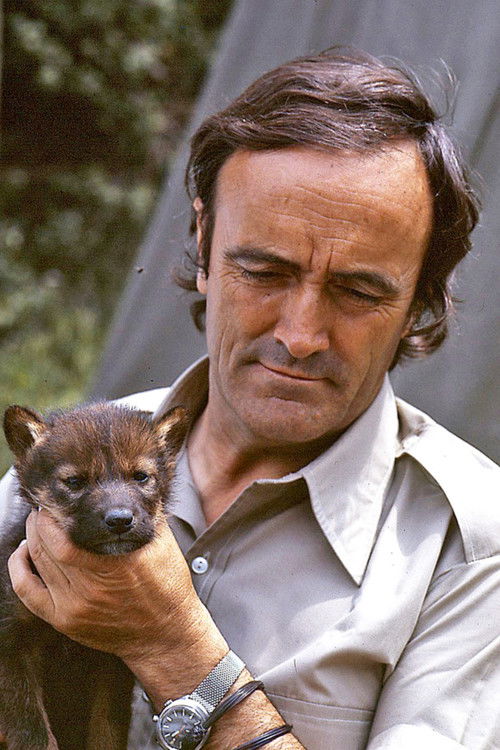
Related TV Series

Mind Field

The F Word

Last Chance U

Drug Lords

History 101

Hulk Hogan: Real American
Trust Me: The False Prophet

Arnold

The Last Movie Stars

Eli Roth's History of Horror

Money, Explained

The New York Times Presents

I AM A KILLER

Beckham
Mammals

Formula 1: Drive to Survive

Medal of Honor

Love Has Won: The Cult of Mother God

Explained